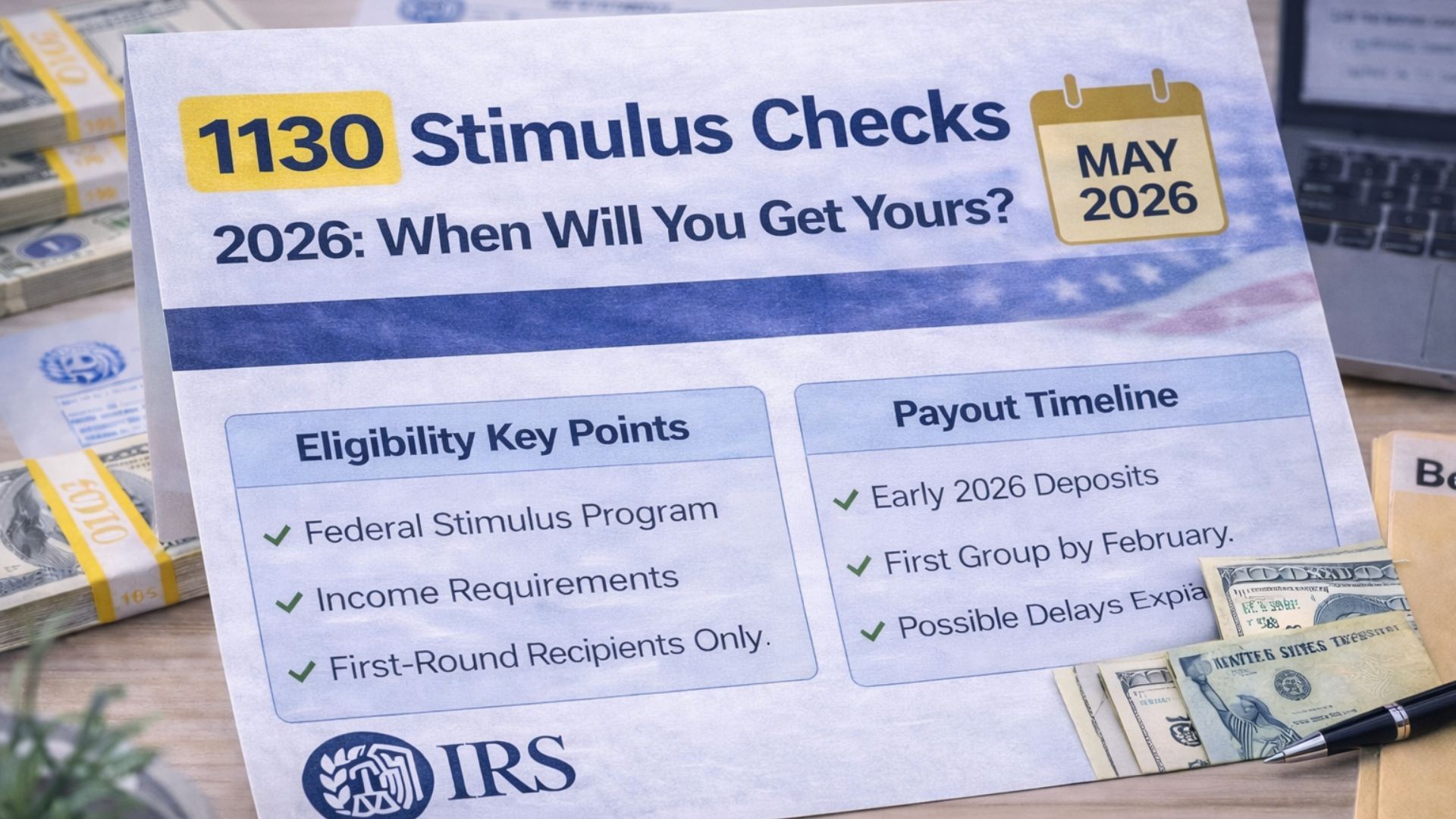
The topic of $1,130 stimulus checks in 2026 has attracted strong public interest, especially among households trying to plan ahead during ongoing economic uncertainty. While details depend on the final structure of any approved program, understanding how eligibility, payment schedules, and verification typically work can help people stay prepared and avoid misinformation.
What the $1,130 Stimulus Check for 2026 Means
A $1,130 stimulus check refers to a proposed or program-based relief payment that would be issued under specific legislation. These payments are not automatic for everyone. They are tied to rules set by the law funding the program and are usually designed to help low- and middle-income residents manage essential expenses.
Any confirmed stimulus payment would be formally announced by the federal government and administered through the Internal Revenue Service, often in coordination with the U.S. Department of the Treasury.

Who May Be Eligible for the Payment
Eligibility for a $1,130 stimulus check depends on income level, tax filing status, and residency requirements defined by the program. In many cases, single filers below a certain adjusted gross income level may qualify for the full amount, while those earning above that range may receive a reduced payment or none at all. Married couples filing jointly may qualify for combined payments if their household income remains within the allowed limits.
The IRS usually relies on the most recent tax return on file to determine eligibility. This makes accurate and timely tax filing extremely important.
How and When Payments Are Sent
Stimulus payments are generally distributed in phases. Direct deposit is usually the first method used, followed by mailed paper checks or prepaid debit cards for those without banking details on record. The timeline often aligns with tax season and IRS processing capacity, which means payments may arrive in waves rather than all at once.

Official payment schedules are published once a program is approved. These schedules outline when deposits or checks are expected to be sent and help recipients estimate arrival times.
How to Confirm or Track Your Payment
The safest way to verify a stimulus payment is through official IRS tools such as payment tracking systems or direct notices sent to taxpayers. These tools show payment method, status, and expected deposit dates. Third-party websites asking for personal or banking details should be avoided, as they are not part of the official process.
If payment is delayed, it is often due to outdated bank information, an incorrect address, or filing status issues. Updating records through official IRS channels usually resolves these problems.

Preparing in Advance
Keeping tax records, bank details, and IRS notices organized can speed up payment delivery and make it easier to resolve issues. Staying informed through official government websites helps ensure accurate expectations.
Disclaimer:
This article is for informational purposes only and does not provide tax, legal, or financial advice. Eligibility, payment amounts, and schedules depend on final legislation and official government rules. Always verify details through authorized government sources or consult a qualified tax professional for guidance specific to your situation.