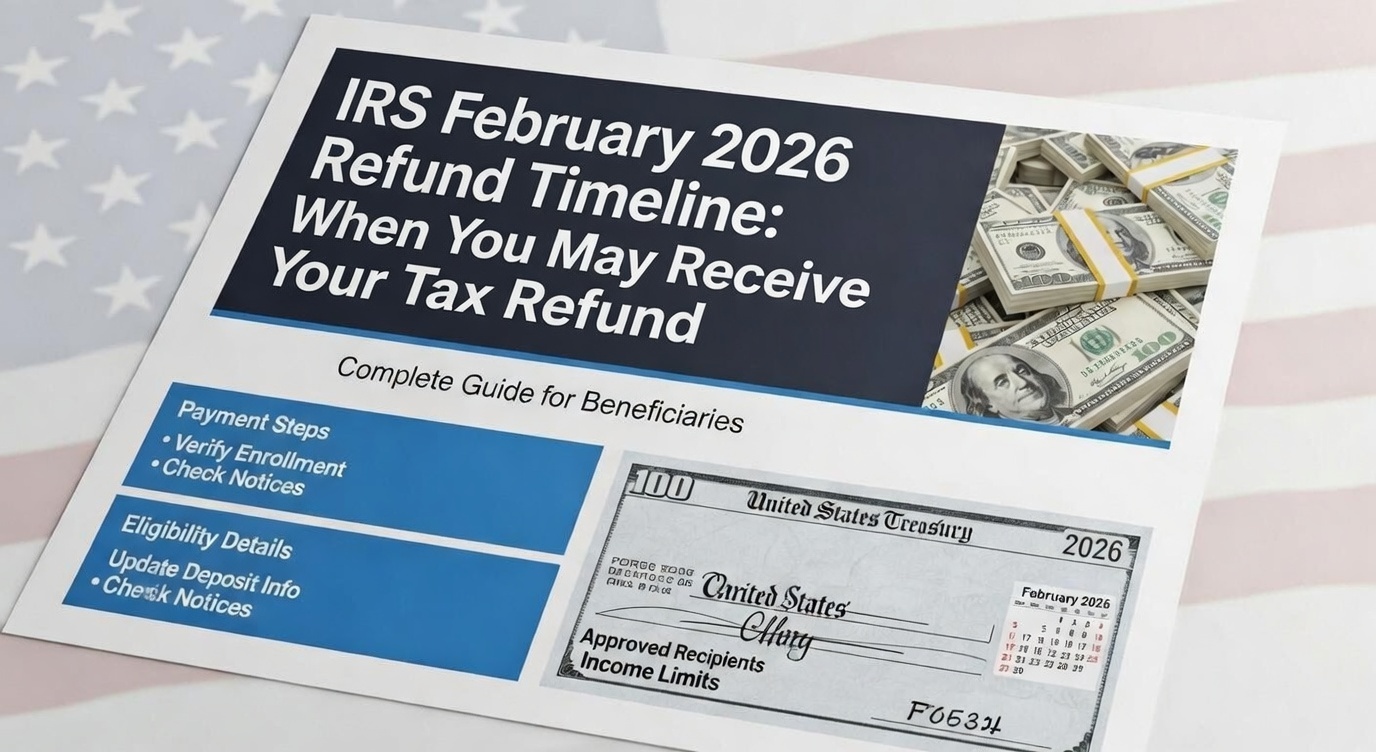
As the 2026 tax filing season gets underway, one question is on many people’s minds: when will my tax refund arrive? For millions of Americans, a tax refund is an important financial event. It is often used to manage household expenses, pay off debt, or build savings. Understanding how the February 2026 IRS refund timeline works can help reduce uncertainty and make planning easier.
When the IRS Starts Processing Returns
The Internal Revenue Service typically begins accepting federal tax returns in late January. Once your return is officially accepted, it enters the processing system. For taxpayers who file electronically and select direct deposit, refunds are usually issued within an average of 21 days. This is not a guarantee, but it reflects the most common processing timeframe for simple and accurate returns.
People who file during the first week of the season often see refunds arrive sooner than those who file later. If your return is accepted in late January, your refund may arrive sometime in February. Returns accepted in early February often result in deposits toward the end of February or in early March.

How Filing Method Affects Refund Speed
The way you file your tax return plays a major role in how quickly you receive your money. Electronic filing is the fastest option because the IRS can begin reviewing your return almost immediately. Direct deposit is also much faster than receiving a paper check, as it avoids mailing delays and reduces the risk of lost payments.
Paper returns take significantly longer to process. They must be manually opened and entered into the system, which can add weeks to the timeline. Taxpayers who mail their returns and request a check may wait six to eight weeks or longer for a refund.
Why Some Refunds Take Longer
While many refunds are processed smoothly, some returns require extra review. Returns that include credits such as the Earned Income Tax Credit or the Additional Child Tax Credit are legally delayed until at least mid-February. Even if these returns are filed early, the IRS cannot release the refund before that time.

Other delays can happen because of small errors. Incorrect Social Security numbers, mismatched income details, missing forms, or wrong bank information can slow processing. Identity verification reviews may also extend the timeline if the IRS needs to confirm information.
Tracking Your Refund Status
After your return is accepted, you can track its progress using the official “Where’s My Refund?” tool on the IRS website. This tool shows whether your return has been received, approved, or sent for payment. Once the refund is sent, banks usually take one to three business days to post the funds.
What to Expect in February 2026
For many early electronic filers, February 2026 is when refunds begin arriving. Filing early, choosing direct deposit, and carefully reviewing your return all improve your chances of receiving your refund within the typical timeframe.

Disclaimer:
This article is for general informational purposes only and does not provide tax, legal, or financial advice. IRS refund timelines, amounts, and eligibility depend on individual circumstances and official policies. Always verify your refund status through official IRS resources or consult a qualified tax professional.